

Description
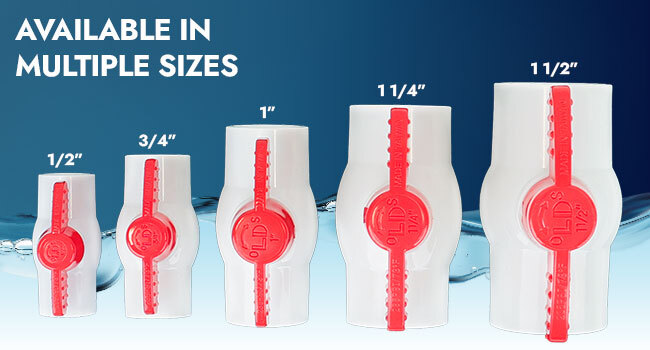
The Schedule 40 PVC Molded-In-Place Ball Valve LD-828 is a durable, corrosion-resistant valve for reliable flow control in residential, commercial, and industrial systems. Its EPDM seals ensure leak-free performance, full-port design minimizes flow restriction, and the ergonomic handle allows smooth, low-torque operation for water, air, and light chemical use.
Features
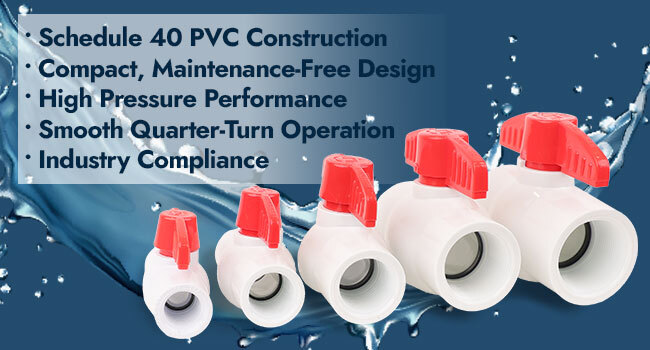
• Schedule 40 PVC Construction: Strong, lightweight, and corrosion-resistant for long-term durability.
• Compact, Maintenance-Free Design: Molded-in-place housing reduces leak points and simplifies installation.
• Full-Port Flow Path: Delivers unrestricted flow for optimal system efficiency.
• Reliable Sealing: Fitted with EPDM or FKM (FPM) O-rings for dependable, leak-free service.
• Smooth Quarter-Turn Operation: Large handle provides precise, low-torque on/off control.
• Industry Compliance: Meets ASTM and NPT standards; NSF-certified models available.
Applications
• Potable and non-potable water systems
• Agricultural and irrigation systems
• Chemical processing and industrial piping
• Food and beverage service lines
• Aquaculture and fish hatchery systems
• Pool, spa, and fountain plumbing
• General-purpose air, liquid, and low-pressure gas applications
Setup & Installation
1. Preparation: Verify that all pipe ends are clean, dry, and free of burrs or debris. Confirm that measurements allow for proper insertion depth.
2. Dry Fit: Temporarily assemble the valve and piping to check alignment before applying cement or sealant.
3. Solvent Cement Assembly (Slip Connections):
• Apply an even coat of approved PVC primer to both the pipe and the valve socket.
• Follow immediately with PVC solvent cement, then insert and twist the pipe slightly to distribute adhesive evenly.
• Hold firmly for 20–30 seconds to secure the joint.
4. Threaded Connections: For threaded ends, wrap threads with PTFE tape or apply a compatible thread sealant. Tighten hand-tight, then snug with a wrench — do not overtighten.
5. Curing & Testing: Allow the joint to cure according to cement manufacturer instructions before pressurizing. Slowly fill the system and check all joints for leaks.
 |
|
 |
Explore more from our collection.


Reviews
There are no reviews yet.